Nutrition SMART Goal Example: 5 Servings a Day Plan
What is an example of a nutrition SMART goal?
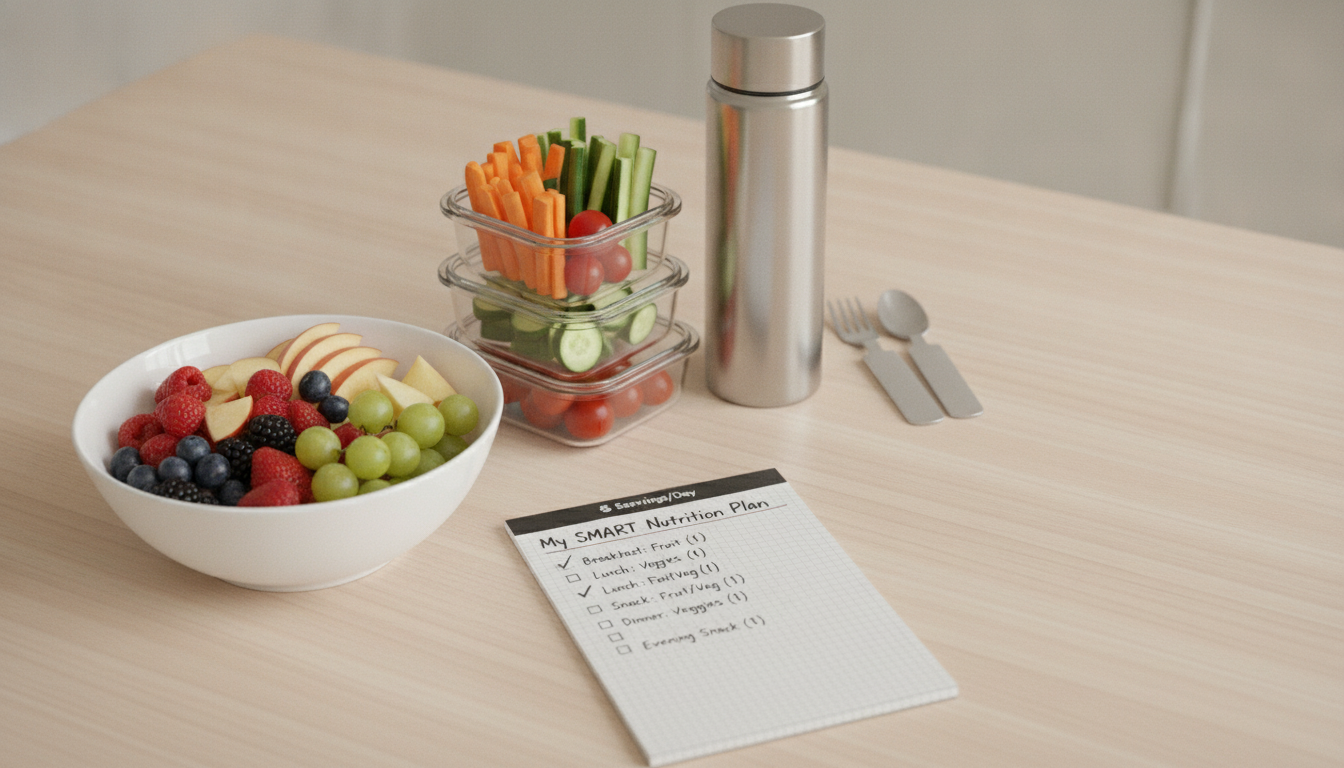
A practical example of a nutrition SMART goal is: “For the next 4 weeks, I will eat at least 5 servings of fruits and vegetables per day by adding one piece of fruit to breakfast, a salad or vegetable side at lunch, and two cups of vegetables at dinner, tracking my servings in a notes app daily.”
This works because it follows the SMART framework: it’s specific (fruits and vegetables), measurable (5 servings), achievable (built into existing meals), relevant (supports overall nutrition), and time-bound (4 weeks). If “5 servings” feels too big at first, a solid adjustment is to start at 3 servings daily for 2 weeks, then increase.
Why this example qualifies as SMART
Specific: It focuses on a clear action—eating fruits and vegetables—rather than a vague goal like “eat healthier.”
Measurable: “5 servings per day” can be counted, which makes progress easy to confirm.
Achievable: It uses small, repeatable steps tied to meals, reducing decision fatigue.
Relevant: Increasing produce intake supports fiber, micronutrients, and better meal balance.
Time-bound: A 4-week window creates urgency and a natural checkpoint to review results.
How to tailor it to your lifestyle
To personalize the goal, choose a tracking method you’ll actually use (calendar checkmarks, a food log, or a habit tracker), and define what a “serving” means for you (for example, 1 cup leafy greens, 1/2 cup cooked vegetables, or 1 medium fruit). If evenings are hectic, prep produce twice per week or keep simple options on hand—baby carrots, frozen vegetables, apples, or pre-washed salad kits.
For more examples and ways to build a goal that matches your routine, visit the main guide on nutrition SMART goals.
For Nutrition SMART Goal Example: 5 Servings a Day Plan, the best answer depends on fit, material, care instructions, and how the product will be used day to day.
FAQ
How do I track a nutrition goal without counting calories?
Use a habit-based metric like “servings per day,” “number of home-cooked meals per week,” or “water bottles finished.” A simple checklist is often enough to stay consistent and see trends.







Leave a comment